

When you picture English Renaissance drama, you probably envision the polished verses of Shakespeare—think Romeo and Juliet (1597) or Hamlet (c. 1599‑1601). This era of English theater, spanning 1558 to 1642 and also called Elizabethan or Jacobean, is usually celebrated for its lofty monologues on love, death, and everything in between. Yet, back then the theatre was the go‑to amusement for the masses, and playwrights took full advantage of that freedom, cranking the absurdity up to eleven. The result? A treasure trove of bizarre, over‑the‑top, and downright shocking moments that still make modern audiences gasp. Below is our top 10 weird roundup of the most outlandish scenes you can find on the English Renaissance stage.
Top 10 Weird Highlights
10 Necrophilia In The Revenger’s Tragedy
Revenge tragedies ruled the Jacobean boards, and Thomas Middleton’s The Revenger’s Tragedy (1606) turns that formula on its gruesome head. The plot follows Vindice, who is bent on avenging his fiancée’s murder at the hands of a lecherous duke. Vindice obsessively carries her skull as a macabre reminder, then dons a disguise to infiltrate the duke’s household as a pimp. In a twisted act of poetic justice, he poisons the dead lover’s skull and mounts it on a lifelike dummy dressed as a prostitute. Mistaking the effigy for a shy maiden, the duke plants a kiss on the skull, only to watch his teeth and tongue rot away “like a slobbering Dutchman” (III.v.164).
The play’s blend of disguise, deception, and morbid sexuality creates a chilling tableau of necrophilia—though the perpetrator is unaware that his lover is already dead. Middleton’s satire of the revenge genre makes the audience squirm while also delivering a scathing critique of aristocratic depravity.
9 Lioness Attack In As You Like It
Shakespeare’s pastoral comedy As You Like It (1599) is famous for its “All the world’s a stage” monologue, but it also hides a wild animal encounter. Orlando, exiled by his jealous brother Oliver, wanders into the Forest of Arden where he discovers Oliver asleep beside a crouching lioness ready to pounce. Despite the fact that lions had vanished from Europe millennia earlier, Shakespeare lets Orlando confront the beast, describing, “The lioness had torn some flesh away, / Which all this while had bled; and now he fainted” (IV.iii.156‑7).
Orlando’s daring fight forces Oliver to reconsider his cruelty, and the brothers reconcile in the end. The scene’s absurdity—mixing a lioness with a Renaissance English forest—adds a thrilling, if historically inaccurate, twist to the comedy.
8 Devil‑Dog In The Witch Of Edmonton
The 1621 collaborative work The Witch of Edmonton by William Rowley, Thomas Dekker, and John Ford dramatizes the real witch‑hunt of Elizabeth Sawyer. After being ostracized, Sawyer bargains with the Devil, who appears not as a suave tempter but as a snarling dog named Tom—portrayed onstage by a human actor in costume. Their relationship veers into the oddly erotic, as Sawyer commands, “Stand on thy hind‑legs up. Kiss me, my Tommy” (IV.i.170) and then demands, “Let’s tickle” (IV.i.173).
The animal form of the Devil adds a bizarre layer to the already unsettling witchcraft narrative, reflecting contemporary rumors of sexual liaisons between witches and demonic entities while injecting a uniquely grotesque twist.
7 Bottom’s Donkey Head In A Midsummer Night’s Dream
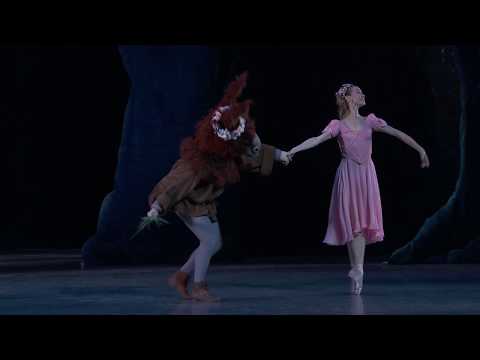
Shakespeare’s whimsical fairy comedy A Midsummer Night’s Dream (1595/96) delivers one of the most iconic transformations in theatre history. The mischievous sprite Puck, whose name is also a synonym for “ass,” magically reshapes the earnest weaver Bottom’s head into that of a donkey. Meanwhile, Titania, the fairy queen, has been drugged with a love potion that compels her to fall for the first creature she sees upon waking—unfortunately, that creature is the donkey‑headed Bottom. She declares, “So is mine eye enthralled to thy shape…,” professing love for the absurd hybrid.
The enchantment is temporary; Bottom’s human head is eventually restored, but the scene remains a beloved example of Renaissance theatre’s love for visual slapstick, magical mishaps, and the occasional animal‑themed romance.
6 Poisoned Portrait And Hat In The White Devil
John Webster’s The White Devil (1612) dramatizes the scandalous murder of Vittoria Accoramboni in Padua, weaving together adultery, ambition, and a series of poison‑laden deaths. Brachiano’s wife, in a nightly ritual, kisses a portrait of her husband that has been laced with poison, leading to her sudden demise. Meanwhile, Camillo, Vittoria’s husband, meets his end when his brother‑in‑law Flamineo stages a gymnastics contest, breaks Camillo’s neck, and hides the body beneath a vaulting horse to mask the murder.
The final blow comes when Brachiano, a nobleman, is poisoned via a hat he wears at a tournament. He cries out, “O, my brain’s on fire” (V.iii.4) before being strangled, illustrating Webster’s penchant for inventive, deadly props that turn ordinary objects into lethal weapons.
5 Merlin Being Born As An Adult In The Birth Of Merlin
William Rowley’s 1622 comedy The Birth of Merlin flips the classic wizard origin story on its head. The plot follows Joan, a woman impregnated by a mysterious stranger, who, along with her clown‑uncle, embarks on a frantic quest through a forest to locate a suitable father for her unborn child. The twist? The devil himself fathers the child, and Joan gives birth not to an infant but to a fully grown man—Merlin.
The play never explains the physics of an adult‑sized birth, but Rowley uses the absurdity to poke fun at mythic conventions. Merlin’s clown‑uncle comments on the spectacle, noting, “a child to speak, eat, and go the first hour of his birth; nay, such a baby as had need of a barber before he was born, too; why, sister, this is monstrous” (III.iv.45‑7).
4 Cannibalism In Titus Andronicus
Shakespeare’s blood‑soaked tragedy Titus Andronicus (c. 1588‑1593) is infamous for its graphic violence, but the play takes the gore to a new level with culinary horror. After a series of brutal murders, the Goth queen Tamora’s sons are killed, their bodies baked into pies. In a gruesome climax, Tamora herself devours the pies, unknowingly consuming the flesh of her own children, echoing the infamous “Mrs. Lovett” scene from later Victorian melodrama.
The vivid description—Titus grinding bones to powder, tempering the mixture with “hateful liquor,” and then serving the resulting “vile heads” as food—cements the play’s reputation as a masterclass in theatrical cannibalism.
3 Incest In ’Tis Pity She’s A Whore
John Ford’s provocative drama ’Tis Pity She’s A Whore (c. 1626‑1633) confronts the taboo of incest head‑on. The story centers on siblings Giovanni and Annabella, whose illicit love affair produces a child and forces Annabella into a sham marriage to conceal their secret. The play’s climax sees Giovanni stabbing Annabella and, while holding her heart on a spike, publicly declaring their forbidden relationship: “For nine months space, in secret I enjoy’d / Sweet Annabella’s sheets” (V.vi.43‑4), followed by a lament that her “too fruitful womb” betrayed their “stolen delights” (V.vi.47‑8).
The raw confession triggers the death of their father, Florio, from shock, underscoring Ford’s refusal to moralize the incest—he simply presents it as a relentless, unstoppable force.
2 The Bear In The Winter’s Tale
Shakespeare’s romance The Winter’s Tale (c. 1610‑1611) is best known for the stage direction that has bewildered actors for centuries: “Exit, pursued by a bear.” In Act III, Scene iii, Antigonus abandons the infant Perdita in the woods, and a bear unexpectedly appears, chasing him offstage. While the bear was likely a costume rather than a live animal, the moment remains one of the most memorable theatrical surprises.
The play also includes other oddities: Hermione, Perdita’s mother, dies and is later resurrected when a statue of her comes to life, and a servant unknowingly uses the word “dildo” in a comedic context, arguably the first recorded use of the term in English literature.
1 Lycanthropia In The Duchess Of Malfi
John Webster’s tragic masterpiece The Duchess of Malfi (1613) depicts the downfall of the titular duchess, whose secret marriage sets off a murderous cascade orchestrated by her two brothers. In the play’s grim finale, the brother Ferdinand is revealed to have succumbed to lycanthropia—a delusional belief that he has turned into a wolf—after being haunted by the guilt of murdering his sister.
A doctor describes Ferdinand’s nocturnal wanderings: “Steal forth to church‑yards in the dead of night, / And dig dead bodies up” (V.ii.14‑5), and later witnesses him “Behind Saint Mark’s church, with the leg of a man / Upon his shoulder; and he howl’d fearfully” (V.ii.17‑8). Meanwhile, the other brother, the Cardinal, forces his mistress to swear silence by kissing a poisoned bible, which kills her instantly—another example of the era’s fascination with lethal, poisoned objects.