

When it comes to the world of mental health, few conditions spark as much intrigue as dissociative identity disorder (DID). Known in the past as multiple personality disorder, DID has been the subject of books, movies, and endless debate among clinicians. Below, we count down the 10 famous cases that have shaped public perception and scientific understanding of this complex disorder.
1 Juanita Maxwell

In the spring of 1979, 23‑year‑old hotel maid Juanita Maxwell was working the night shift at a Fort Myers resort when a gruesome murder shocked the community. Seventy‑two‑year‑old guest Inez Kelley was found dead, beaten, bitten, and strangled. Police zeroed in on Maxwell after discovering blood‑stained shoes and a fresh scratch on her face. She swore she had no recollection of the crime.
While awaiting trial, Maxwell consulted a psychiatrist. During the proceedings she entered a plea of not guilty, citing the presence of multiple personalities. In total she reported six distinct alters, one of which—Wanda Weston—admitted to committing the homicide. The courtroom drama peaked when a social worker coaxed Wanda onto the stand; the transformation from the soft‑spoken Juanita to the boisterous, violent Wanda left the judge astonished, prompting him to wonder whether he was witnessing a genuine case of DID or an Oscar‑worthy performance.
After being committed to a psychiatric facility, Maxwell claimed her treatment amounted to nothing more than tranquilizers. She was later released, only to be arrested again in 1988 for a bank robbery, which she again attributed to Wanda’s takeover. She entered a no‑contest plea and served the remainder of her sentence. The case remains a stark illustration of how DID can intersect with the criminal justice system.
2 Billy Milligan
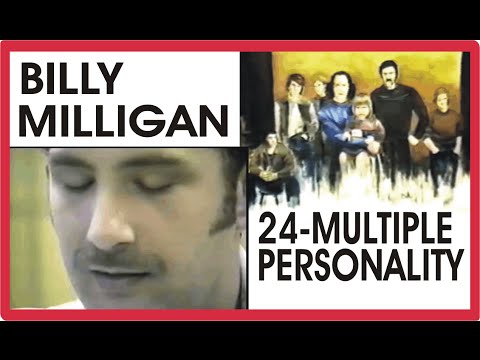
Between October 14 and 26, 1977, three women attending Ohio State University were abducted, robbed, and raped near the campus. The perpetrator was identified as 22‑year‑old Billy Milligan, a man later found to be living with 24 distinct personalities. Two of these alters—Ragen, a Yugoslavian man, and Adalana, a lesbian alter—were deemed responsible for the sexual assaults, while other personalities handled the robberies.
Milligan’s defense team argued that the crimes were not committed by the “real” Billy but by his alters, a strategy that convinced the jury. He became the first American ever found not guilty by reason of insanity on the basis of DID. Following his conviction, he spent several years in a state mental hospital before being released in 1988 after clinicians believed the alters had merged.
Author Daniel Keyes chronicled Milligan’s life in the 1981 bestseller The Minds of Billy Milligan. Though Hollywood has flirted with adapting the story, no full‑length film has materialized; a limited series titled The Crowded Room is currently in development. Milligan succumbed to soft‑tissue cancer on December 12, 2014, at age 59.
3 Chris Costner Sizemore
Chris Costner Sizemore’s first encounter with a split personality occurred around age two, when she witnessed a man pulled from a ditch and, in the same instant, saw a little girl observing the scene. Unlike many DID patients, Sizemore grew up in a nurturing environment, yet the traumatic incident, compounded later by a gruesome factory accident, left a lingering imprint on her psyche.
In her early twenties, after giving birth to her first daughter Taffy, Sizemore experienced a frightening episode: one alter, “Eve Black,” attempted to strangle the infant, only to be stopped by another alter, “Eve White.” Seeking professional help, she began therapy with Corbett H. Thigpen in the early 1950s, who diagnosed her with multiple personality disorder. Over the next quarter‑century, she cycled through eight psychiatrists and accumulated a total of 22 distinct personalities, each varying in age, gender, demeanor, and even body weight.
In July 1974, after four years of intensive work with Dr. Tony Tsitos, all of Sizemore’s alters integrated into a single identity. Her case inspired the seminal book The Three Faces of Eve by Thigpen and Hervey M. Cleckley, later adapted into a 1957 film that earned Joanne Woodward an Academy Award for Best Actress. Sizemore passed away from a heart attack on July 24, 2016, at the age of 89.
4 Shirley Mason
Born on January 25, 1923, in Dodge Center, Minnesota, Shirley Mason endured a harrowing childhood marked by severe maternal abuse, including forced enemas and cold‑water stomach fills. By 1954, she was under the care of Dr. Cornelia Wilbur in Omaha, and a year later she began reporting bewildering episodes of waking up in unfamiliar hotels or finding herself amidst destroyed merchandise with no memory of how she got there.
These episodes triggered the emergence of multiple personalities during therapy. Mason’s story captured public imagination through the bestseller Sybil, later transformed into a highly acclaimed television miniseries starring Sally Field. However, the authenticity of her case has been fiercely contested; critics argue that Mason may have been a vulnerable patient who, under Wilbur’s influence, adopted the multiple personality narrative.
Despite the fame, Mason’s later life was marred by barbiturate addiction and financial dependence on her therapist. She died on February 26, 1998, from breast cancer, leaving behind a legacy that continues to spark debate over the reality of DID.
5 Karen Overhill

In 1989, Dr. Richard Baer began treating a 20‑year‑old mother named Karen Overhill, who was battling depression, chronic pain, and suicidal thoughts. Overhill reported episodic memory gaps and moments of waking up in unfamiliar places. After months of sessions, Baer received a letter from a 7‑year‑old alter named Claire, confirming the existence of multiple personalities.
Further investigation revealed a total of 17 distinct alters, ranging from children to adults of various genders. These personalities recounted a harrowing past involving a family‑run cult that subjected Karen to ritualistic abuse, including being placed on an embalming table and subjected to needle punctures, coat‑hanger piercings, and beatings with hammers. One alter, Jensen, emerged to help Karen cope with a rape she suffered at age twelve.
After two decades of therapy, Baer successfully integrated the personalities, though Karen continued to grapple with low self‑esteem and shame. She married, had children—though she could not recall the weddings or births—later divorced an abusive spouse, and now raises her kids. Baer documented the journey in his book Switching Time.
6 Truddi Chase
Truddi Chase endured unimaginable trauma from the age of two, when her stepfather began a prolonged campaign of physical and sexual abuse, while her mother inflicted emotional torment for twelve years. As an adult working as a real‑estate broker, the weight of these experiences manifested as a cascade of 92 distinct personalities.
Among the alters were a five‑year‑old girl named Lamb Chop and a thousand‑year‑old Irish poet‑philosopher called Ean. Remarkably, the alters cooperated, sharing awareness and memories, and collectively referred to themselves as “The Troops.” Chase resisted integration, believing that the alters had survived together and should remain united.
Together with her therapist, she authored the memoir When Rabbit Howls (1987), later adapted into a television miniseries in 1990. Chase also appeared on a moving segment of the Oprah Winfrey Show that same year. She passed away on March 10, 2010.
7 Kim Noble
Born in the United Kingdom in 1960 to factory‑worker parents in a troubled marriage, Kim Noble suffered physical abuse from an early age and faced a series of mental health crises during adolescence, including multiple overdoses and institutionalization.
In her twenties, her alter personalities erupted with destructive tendencies. One alter, Julie, commandeered Noble’s van and crashed into a row of parked cars. Another alter became entangled in a pedophile ring; when she reported the ring to authorities, she began receiving anonymous threats, endured an acid attack to her face, and saw her house set ablaze—events she could not recall.
Diagnosed with DID in 1995, Noble now channels her experiences into art. She estimates having around 100 personalities, cycling through four or five each day. The most dominant alter, Patricia, is described as calm and confident, while Hayley is linked to the earlier pedophile‑ring incident. Noble and her daughter appeared on The Oprah Winfrey Show in 2010, and she published her memoir All of Me: How I Learned to Live with the Many Personalities Sharing My Body in 2012.
8 Robert Oxnam

Robert Oxnam, a distinguished American sinologist, has spent his career dissecting Chinese culture, holding positions such as president of the Asian Society and private consultant on Chinese affairs. Yet behind his scholarly achievements, Oxnam wrestled with personal demons.
In 1989, a psychiatrist diagnosed him with alcoholism. A pivotal therapy session in March 1990 revealed an unexpected alter: a young, angry boy named Tommy who claimed to reside in a castle. Subsequent sessions uncovered a total of 11 distinct personalities.
Through years of treatment, Oxnam and his therapist narrowed the roster to three core alters: the primary Robert (or Bob), a younger, free‑spirited alter named Bobby who enjoys rollerblading in Central Park, and a “Buddhist‑like” personality called Wanda, who previously manifested as the Witch. Oxnam chronicled his journey in the memoir A Fractured Mind: My Life With Multiple Personality Disorder (2005).
9 Judy Castelli

Raised in New York State, Judy Castelli endured severe physical and sexual abuse, which later spiraled into chronic depression. In 1967, a month after enrolling in college, she was expelled by the campus psychiatrist. Over the following years, Castelli battled internal voices urging self‑harm, culminating in near‑fatal injuries to her face, vision, and an arm, alongside multiple suicide attempts. Each episode resulted in a diagnosis of chronic undifferentiated schizophrenia.
The 1980s saw Castelli channeling her energy into the arts, performing in Greenwich Village clubs, nearly securing a record deal, and headlining an off‑Broadway show. Her artistic pursuits extended to sculpting and stained‑glass work.
In 1994, during a therapy session with a long‑time clinician, Castelli’s personality system surfaced: initially seven alters, eventually swelling to 44. Embracing her diagnosis, she became a vocal advocate for DID, serving on the board of the New York Society for the Study of Multiple Personality and Dissociation, while continuing to teach art to individuals battling mental illness.
10 Louis Vivet

Louis Vivet stands as one of the earliest documented instances of multiple personalities. Born on February 12, 1863, to a prostitute in France, Vivet’s childhood was marked by neglect. By eight, he turned to petty crime and eventually found himself in a treatment facility during his teenage years.
At 17, while working in a vineyard, a viper coiled around his left arm. Though the snake never bit him, the terror induced a psychosomatic paralysis from the waist down. Confined to an asylum, Vivet regained mobility after a year, but emerged with a markedly different demeanor: darker mood, altered appetite, and no recognition of former acquaintances.
Released at 18, Vivet’s life continued in a pattern of institutionalizations. Between 1880 and 1881, under hypnosis and metallotherapy, a physician identified as many as ten distinct personalities, each with unique traits and histories. Later analyses, however, suggest the true count may have been closer to three.
These ten remarkable stories illustrate the breadth and depth of dissociative identity disorder, reminding us that behind every headline lies a complex tapestry of human experience.